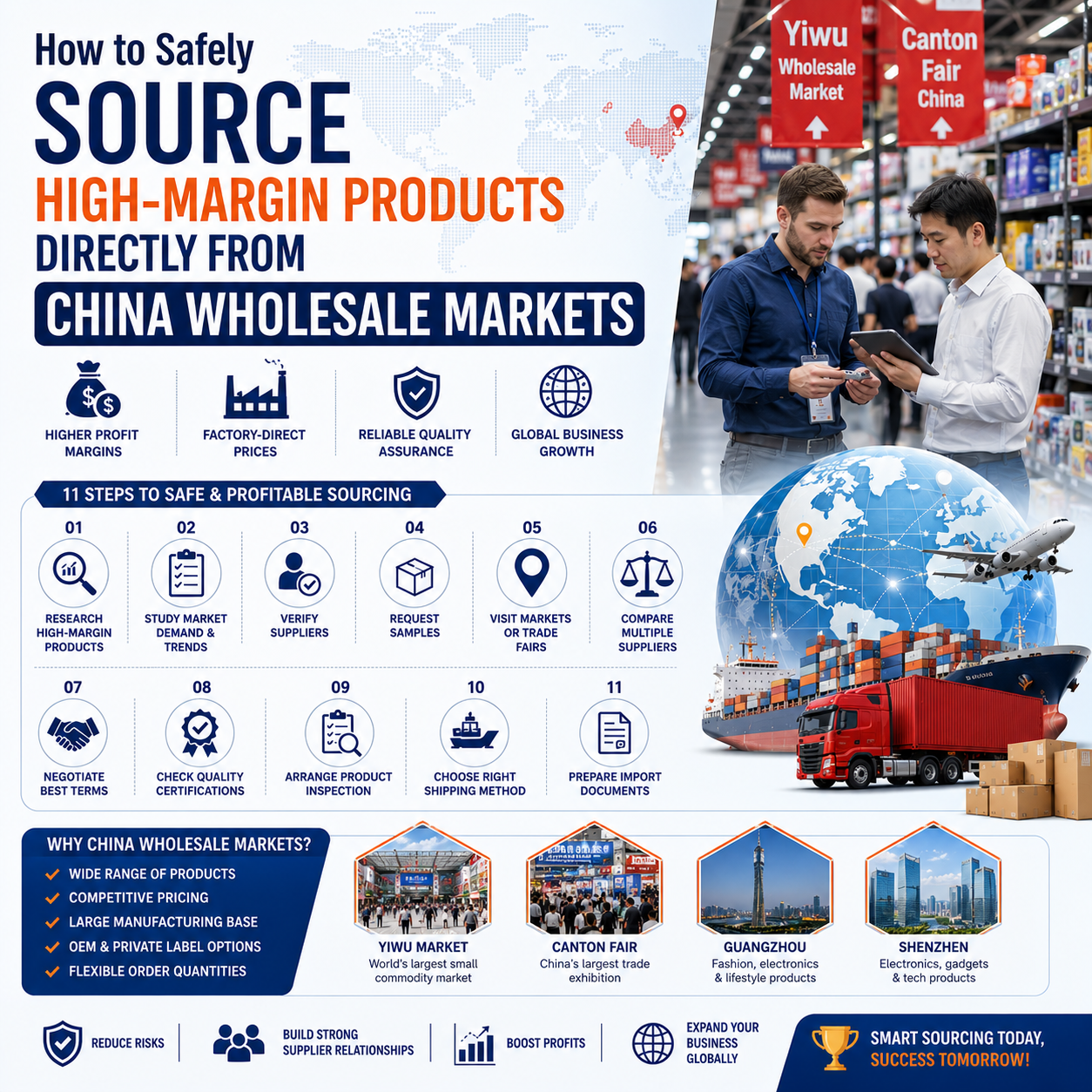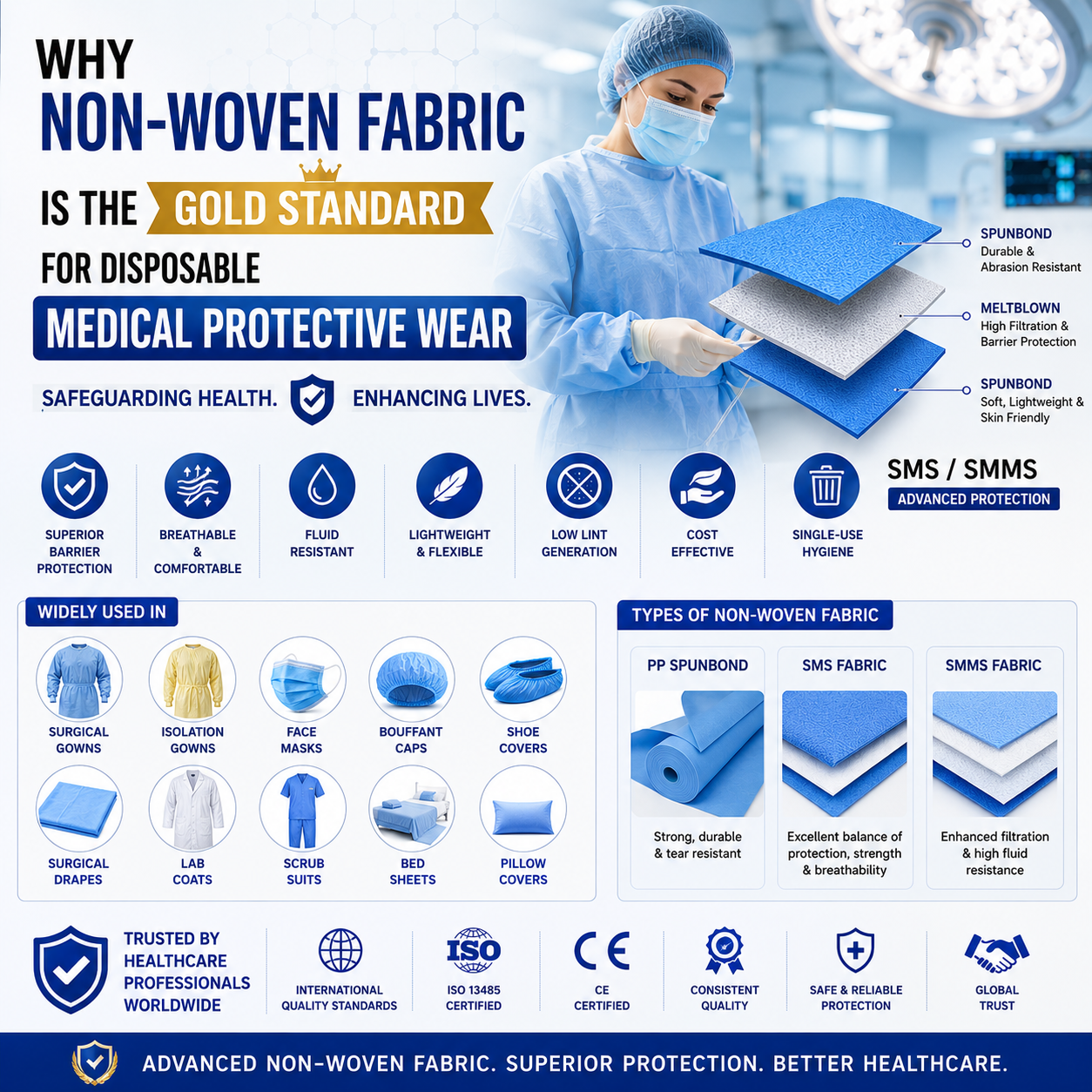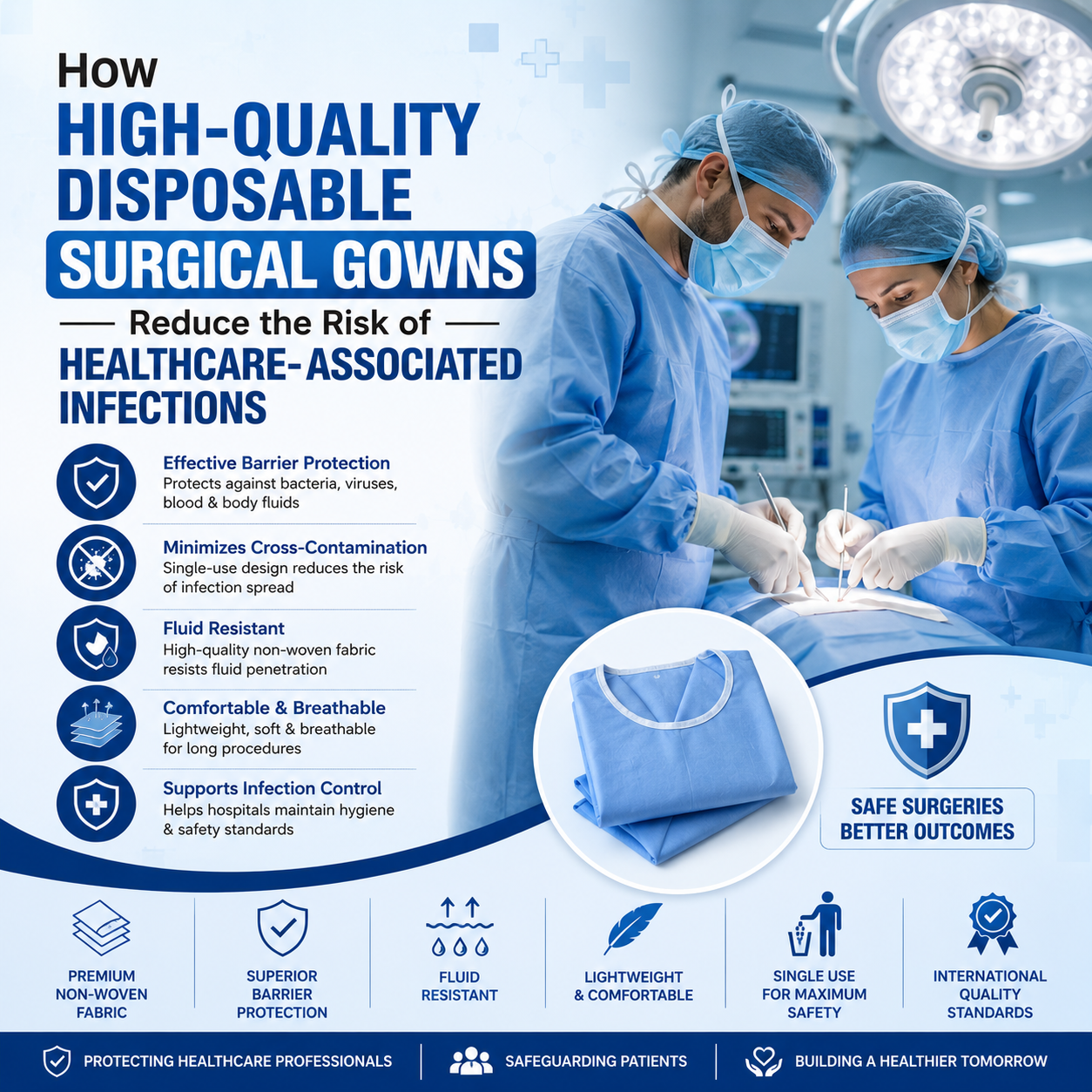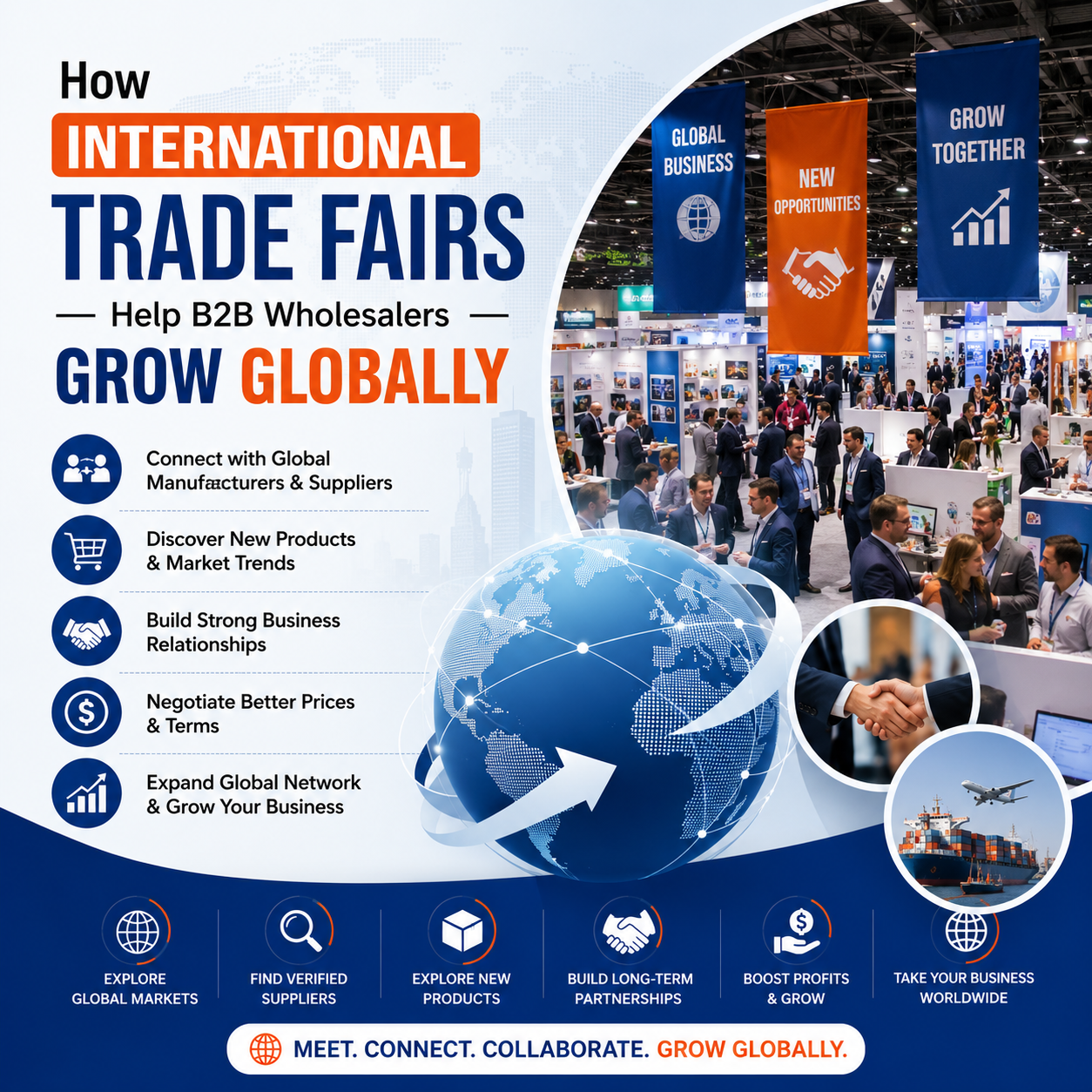

The global demand for medical disposable products continues to grow as hospitals, clinics, laboratories, and healthcare distributors prioritize infection prevention, patient safety, and regulatory compliance. Whether you’re importing disposable surgical gowns, face masks, gloves, drapes, isolation gowns, or other healthcare consumables, choosing products with the right safety certifications is essential.
Medical disposable certifications demonstrate that products are manufactured under strict quality management systems and comply with international healthcare standards. For importers, distributors, wholesalers, hospitals, and procurement managers, understanding these certifications helps reduce sourcing risks while ensuring product reliability.
This guide explains the most important safety certifications to look for when sourcing global medical disposables and why they matter.
Why Safety Certifications Matter
Medical disposable products are used in environments where hygiene and patient safety are critical. Products that meet recognized international standards help healthcare providers maintain infection control while complying with regulatory requirements.
Benefits of certified medical disposable products include:
- Consistent product quality
- Improved patient safety
- Better infection prevention
- Compliance with international regulations
- Increased buyer confidence
- Easier customs and regulatory approvals
- Reduced product liability risks
- Long-term supplier reliability
What Are Medical Disposable Safety Certifications?
Safety certifications verify that a manufacturer follows internationally recognized quality systems and produces medical disposable products that meet applicable performance, safety, and regulatory requirements.
These certifications are assessed through documentation reviews, audits, testing, and ongoing compliance monitoring.
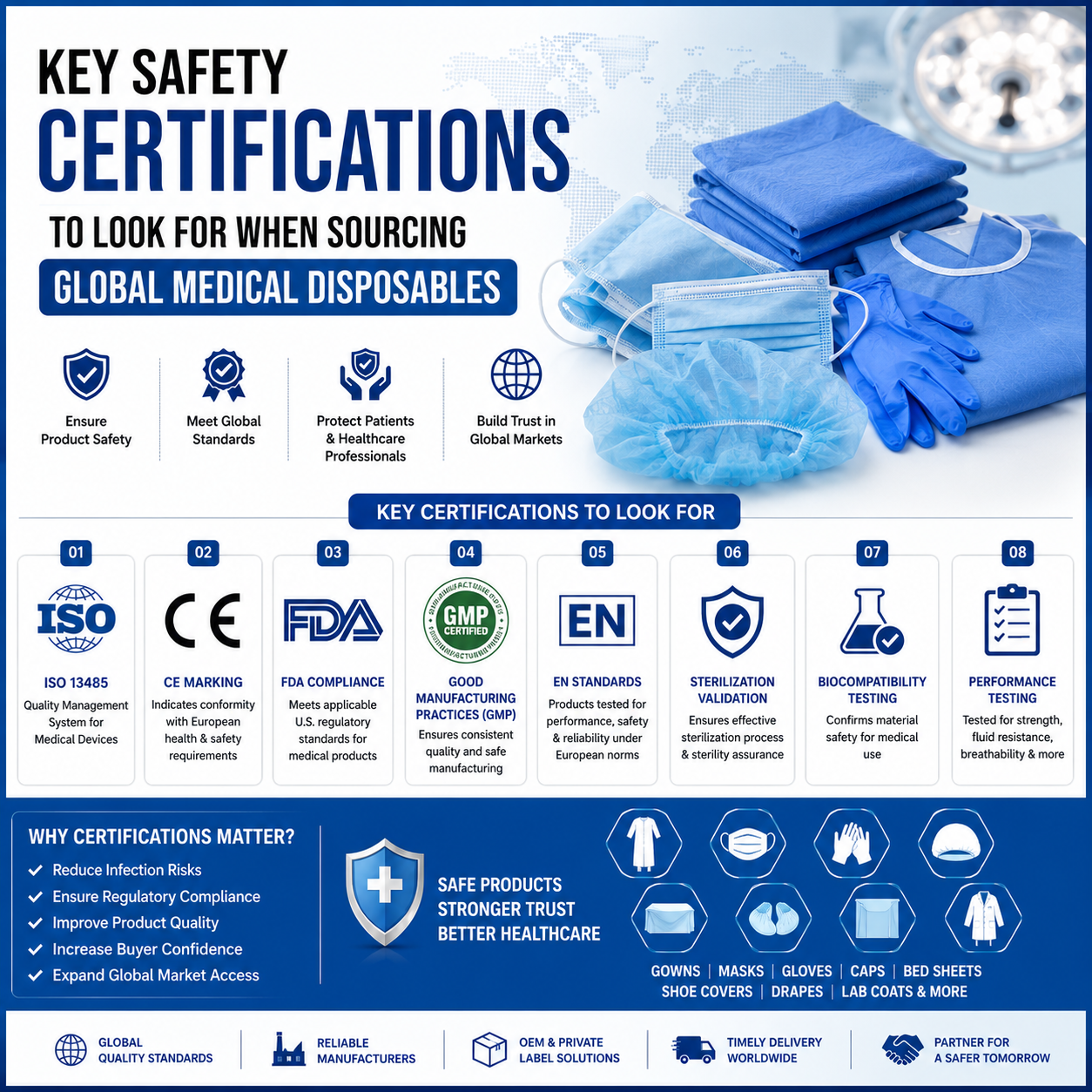
1. ISO 13485 – Quality Management System for Medical Devices
ISO 13485 is one of the most important certifications for manufacturers of medical devices and disposable healthcare products.
It demonstrates that a manufacturer has implemented a quality management system specifically designed for medical device production.
Why ISO 13485 Matters
- Consistent manufacturing processes
- Strong quality control systems
- Risk management procedures
- Product traceability
- Continuous quality improvement
- Greater confidence for international buyers
Hospitals, distributors, and procurement teams often prioritize suppliers with ISO 13485 certification.
2. CE Marking
CE Marking indicates that a medical device complies with applicable European regulatory requirements for safety, health, and performance.
Products carrying the CE Mark are commonly accepted across many international markets.
Benefits
- Compliance with European requirements
- Improved market access
- Enhanced buyer trust
- Demonstrated product safety
- Easier international distribution
For exporters targeting Europe, CE-compliant products are often essential.
3. FDA Compliance
For companies supplying medical disposable products to the United States, compliance with applicable U.S. regulatory requirements is an important consideration.
Many hospitals and healthcare distributors prefer products manufactured by facilities that meet relevant FDA expectations.
Advantages
- Higher credibility
- Better access to the U.S. healthcare market
- Strong quality assurance
- Increased buyer confidence
Importers should always verify the applicable regulatory status for the specific product category.
4. Good Manufacturing Practices (GMP)
Good Manufacturing Practices help ensure that medical disposable products are manufactured consistently and under controlled conditions.
GMP focuses on:
- Clean production environments
- Standard operating procedures
- Staff training
- Equipment maintenance
- Product quality monitoring
- Documentation control
Manufacturers following GMP reduce the risk of contamination and quality defects.
5. EN Standards
Many disposable medical products are tested according to European EN standards for performance and safety.
These standards evaluate characteristics such as:
- Barrier protection
- Fluid resistance
- Strength
- Breathability
- Material performance
Products tested to applicable EN standards provide additional assurance to healthcare buyers.
6. Sterilization Validation
For sterile medical disposable products, manufacturers should validate sterilization processes using recognized international methods.
Validation helps ensure:
- Sterility assurance
- Consistent production
- Patient safety
- Reliable product performance
Sterile products should also maintain integrity throughout packaging and transportation.
7. Biocompatibility Testing
Medical disposable products that come into contact with patients should be evaluated for biocompatibility.
Testing helps verify that materials are appropriate for their intended medical use and do not create unnecessary biological risks.
8. Material Safety and Performance Testing
High-quality medical disposable manufacturers conduct extensive testing for:
- Tensile strength
- Fluid resistance
- Breathability
- Tear resistance
- Seam strength
- Material consistency
- Barrier effectiveness
These tests ensure products perform reliably in clinical environments.
How Certifications Reduce Healthcare Risks
Certified medical disposable products help healthcare facilities by:
- Reducing contamination risks
- Supporting infection control
- Improving patient protection
- Protecting healthcare workers
- Maintaining consistent product quality
- Reducing product failures
Properly certified products contribute to safer healthcare environments worldwide.
What International Buyers Should Verify Before Purchasing
Before placing bulk orders, buyers should verify:
- Manufacturer certifications
- Product testing reports
- Quality management systems
- Manufacturing capabilities
- Product specifications
- Batch traceability
- Packaging standards
- Export experience
- Production capacity
- Regulatory documentation
Performing supplier due diligence reduces sourcing risks.
Why Global Buyers Source Medical Disposables from India
India has become one of the world’s leading manufacturing hubs for medical disposable products.
International buyers value Indian manufacturers because they offer:
- International quality standards
- Competitive factory pricing
- Large production capacity
- Export expertise
- OEM manufacturing
- Private label services
- Reliable global shipping
- Consistent product quality
Indian manufacturers export to:
- United States
- United Kingdom
- Germany
- France
- Italy
- Canada
- Australia
- UAE
- Saudi Arabia
- South Africa
Medical Disposable Products That Commonly Require Certifications
Certified manufacturers produce a wide range of healthcare products, including:
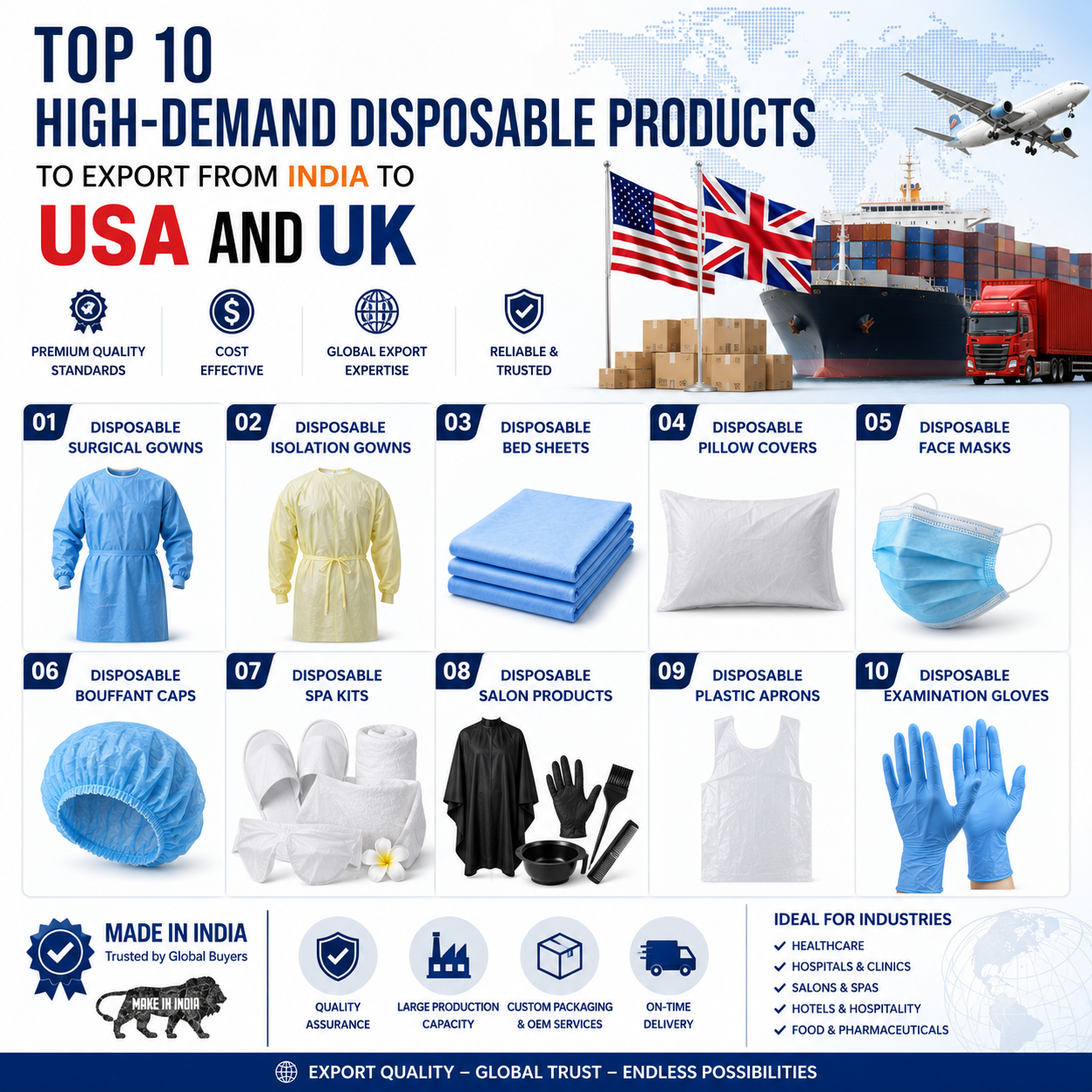
- Disposable Surgical Gowns
- Isolation Gowns
- Surgical Drapes
- Face Masks
- Examination Gloves
- Surgical Caps
- Shoe Covers
- Lab Coats
- Scrub Suits
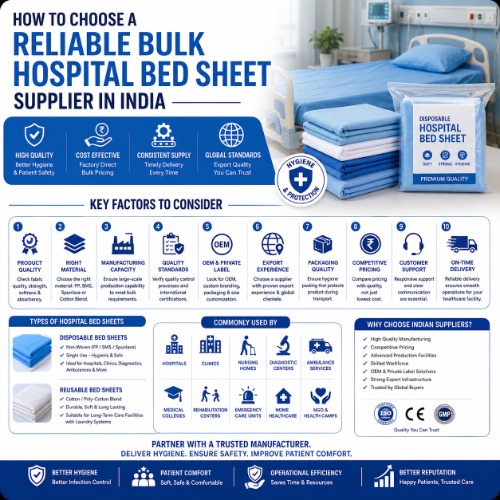
- Bed Sheets
- Pillow Covers
- Protective Apparel
Tips for Choosing the Right Medical Disposable Manufacturer
When evaluating suppliers, consider:
- Manufacturing experience
- International certifications
- Product quality
- OEM capabilities
- Private label options
- Production capacity
- Export history
- Customer support
- Timely delivery
- Competitive pricing
Long-term partnerships are built on quality, transparency, and consistent performance.
Industries That Depend on Certified Medical Disposables
Certified disposable products are widely used across:
- Hospitals
- Clinics
- Surgical Centers
- Diagnostic Laboratories
- Pharmaceutical Companies
- Medical Colleges
- Dental Clinics
- Emergency Care Centers
- Nursing Homes
- Healthcare Distributors
Frequently Asked Questions (FAQs)
Why are medical disposable certifications important?
They demonstrate that products are manufactured under recognized quality systems and meet applicable safety and performance requirements.
Which certification is most important for medical disposable manufacturers?
ISO 13485 is widely recognized as one of the most important quality management certifications for medical device manufacturers.
Is CE Marking required for exports to Europe?
Many medical devices placed on the European market require CE Marking under applicable regulations. Buyers should verify the specific requirements for the product category.
Should importers verify certifications before placing orders?
Yes. Buyers should request current certification documents, product specifications, and relevant testing reports before confirming purchases.
Can Indian manufacturers supply certified medical disposable products?
Yes. Many Indian manufacturers produce internationally compliant medical disposable products and provide OEM and private label manufacturing for global healthcare brands.
Conclusion
Safety certifications play a crucial role in ensuring the quality, reliability, and compliance of medical disposable products. Whether sourcing for hospitals, healthcare distributors, or international wholesale markets, choosing certified manufacturers helps minimize risks while maintaining the highest standards of patient and healthcare worker safety.
By working with experienced manufacturers that follow internationally recognized quality systems, buyers can confidently source medical disposables that meet global expectations for performance, consistency, and regulatory compliance.