
The healthcare industry depends on high-quality protective apparel to ensure the safety of patients, doctors, nurses, and frontline healthcare professionals. From surgical gowns and isolation gowns to face masks, caps, shoe covers, and protective drapes, disposable medical protective wear has become an essential part of infection prevention.
At the heart of these products is non-woven fabric, a material that has become the global standard for manufacturing disposable medical protective wear. Thanks to its excellent barrier protection, lightweight structure, breathability, and cost-effectiveness, non-woven fabric is widely trusted by hospitals and healthcare organizations worldwide.
In this guide, we’ll explore why non-woven fabric is considered the gold standard for disposable medical protective wear and why global buyers continue to source these products from experienced manufacturers.
What is Non-Woven Fabric?
Non-woven fabric is an engineered textile made by bonding fibers together through mechanical, thermal, or chemical processes rather than traditional weaving or knitting.
Unlike woven fabrics, non-woven materials offer superior performance for single-use medical applications because they combine strength, comfort, and protective properties in a lightweight design.
Common types of non-woven fabrics used in healthcare include:
- Polypropylene (PP) Non-Woven
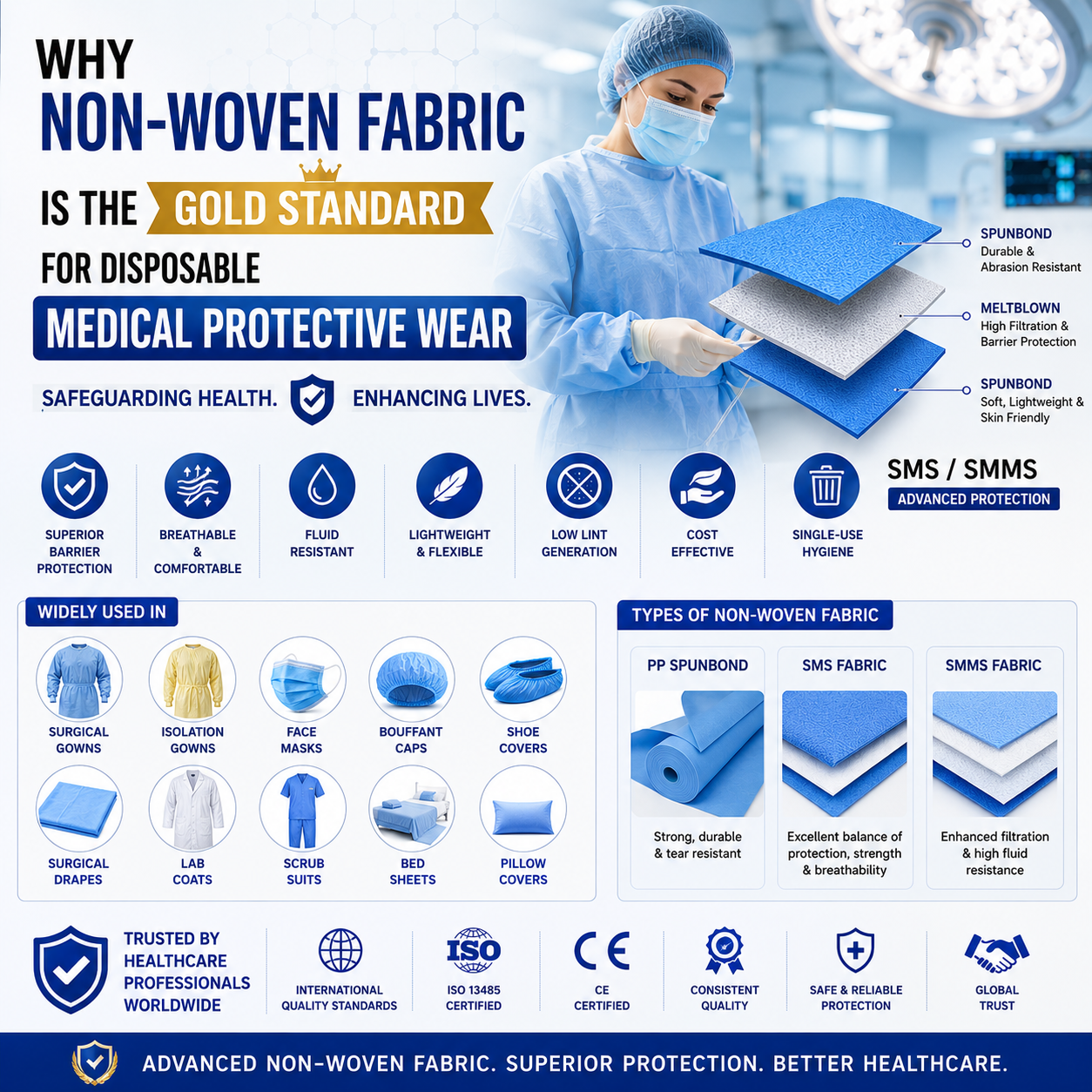
- SMS (Spunbond-Meltblown-Spunbond)
- SMMS (Spunbond-Meltblown-Meltblown-Spunbond)
- Spunlace Non-Woven
- Meltblown Fabric
Each material is selected based on the required level of protection and intended medical application.
Why Non-Woven Fabric is the Preferred Choice
Healthcare professionals need protective apparel that offers both comfort and reliable protection. Non-woven fabric delivers an ideal balance of performance and practicality.
Key advantages include:
- Lightweight construction
- Excellent barrier protection
- Breathable material
- Fluid resistance
- Low lint generation
- Comfortable fit
- Disposable hygiene
- Cost-effective production
These features make non-woven fabric suitable for hospitals, surgical centers, clinics, and laboratories.
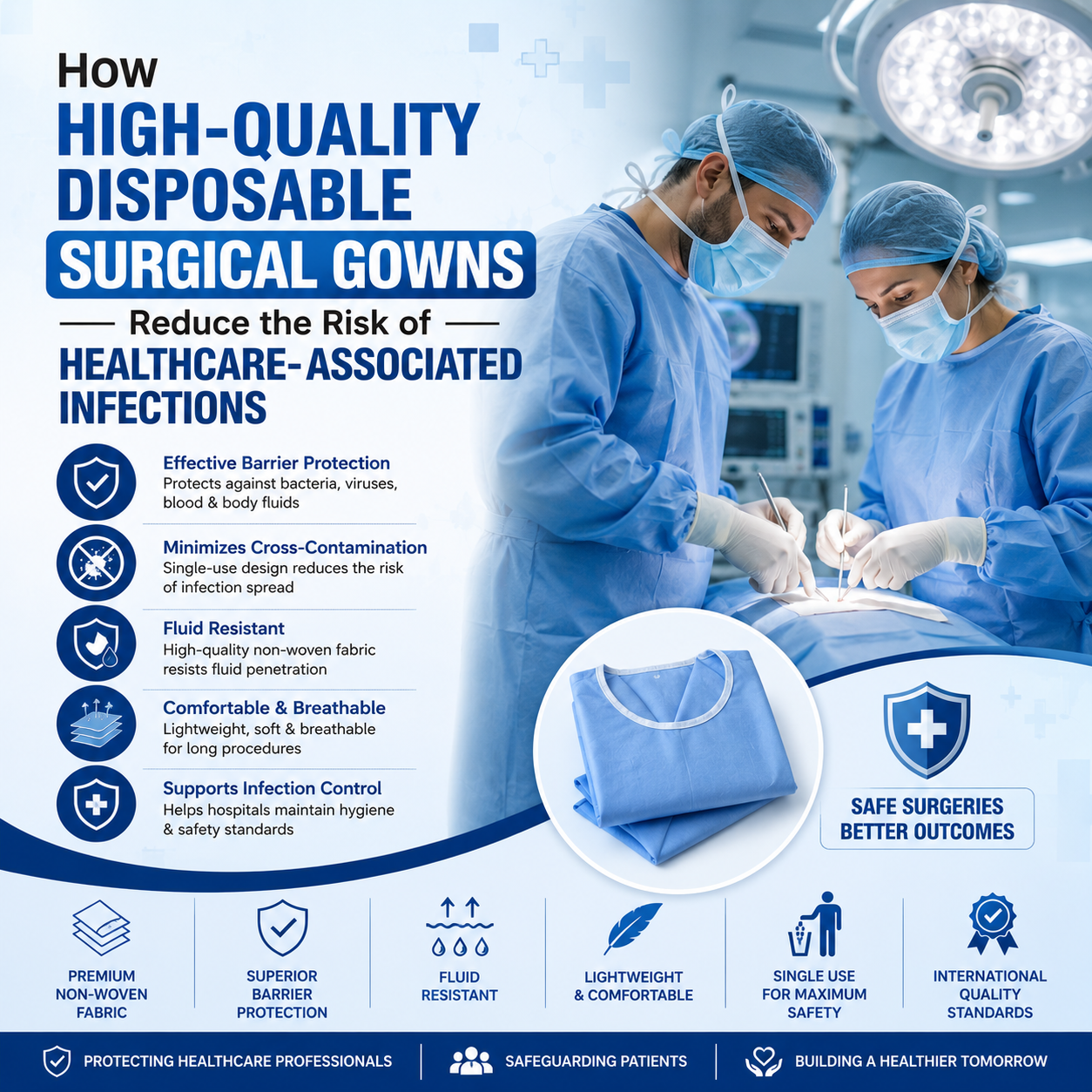
1. Superior Barrier Protection
One of the primary reasons non-woven fabric is used in medical protective wear is its ability to act as an effective barrier against contaminants.
High-quality non-woven fabrics help protect against:
- Bacteria
- Viruses
- Blood
- Body fluids
- Liquid splashes
- Airborne particles
This protection helps reduce cross-contamination in healthcare environments.
2. Lightweight and Comfortable
Medical professionals often wear protective clothing for several hours.
Non-woven fabrics are designed to provide:
- Lightweight comfort
- Reduced fatigue
- Soft texture
- Better mobility
- Flexible movement
Comfort improves productivity while maintaining protection throughout long procedures.
3. Excellent Breathability
Protective clothing should not compromise wearer comfort.
Modern non-woven fabrics allow air circulation while maintaining protective performance.
Benefits include:
- Better airflow
- Reduced heat buildup
- Improved wearer comfort
- Lower moisture accumulation
Breathable protective apparel is especially valuable during extended surgical procedures.
4. Fluid Resistance
Medical procedures often involve exposure to blood and other bodily fluids.
SMS and SMMS non-woven fabrics provide enhanced resistance against fluid penetration, helping healthcare professionals remain protected during high-risk procedures.
5. Low Lint Generation
Traditional woven fabrics may release fibers during use.
Non-woven medical fabrics are designed to minimize lint generation, reducing the risk of airborne contamination in sterile environments such as:
- Operating Rooms
- Intensive Care Units
- Clean Rooms
- Laboratories
Low-lint materials help support strict infection control protocols.
6. Single-Use Hygiene
Disposable protective apparel eliminates many concerns associated with reusable garments.
Benefits include:
- Fresh garment for every procedure
- No laundering required
- Reduced contamination risk
- Simplified inventory management
- Better infection prevention
Single-use medical wear has become a standard practice in modern healthcare.
7. Cost-Effective Manufacturing
Non-woven fabrics allow manufacturers to produce high-quality medical disposable products efficiently.
Advantages include:
- Lower production costs
- High manufacturing speed
- Consistent product quality
- Scalable production capacity
These efficiencies help hospitals and distributors manage costs without compromising safety.
Common Medical Products Made from Non-Woven Fabric
Non-woven fabric is widely used to manufacture:
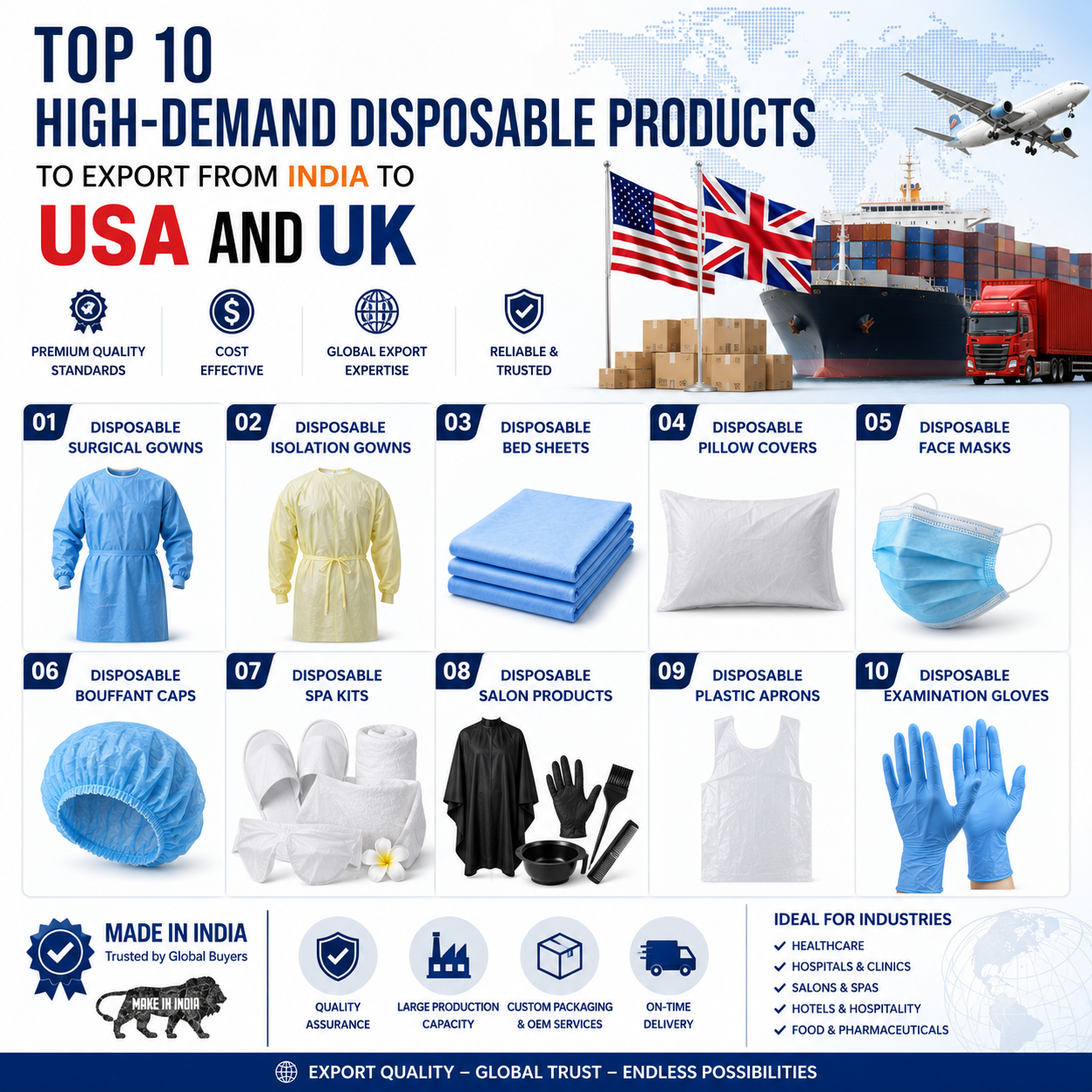
- Disposable Surgical Gowns
- Disposable Isolation Gowns
- Surgical Drapes
- Face Masks
- Bouffant Caps
- Shoe Covers
- Lab Coats
- Scrub Suits
- Patient Gowns
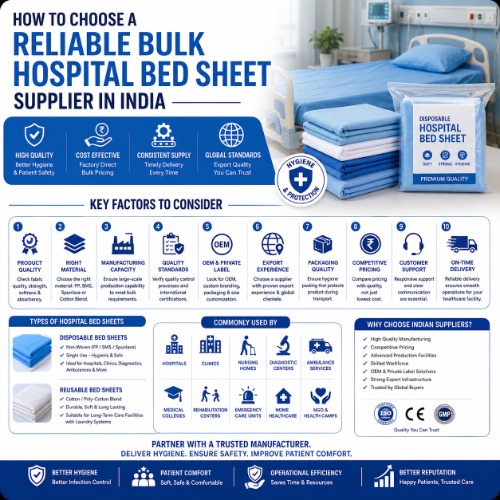
- Disposable Bed Sheets
- Pillow Covers
- Medical Aprons
These products support infection prevention across healthcare facilities worldwide.
SMS vs. SMMS Non-Woven Fabric
SMS (Spunbond-Meltblown-Spunbond)
Features:
- Excellent strength
- Good breathability
- Reliable barrier protection
- Lightweight construction
Common applications:
- Surgical gowns
- Isolation gowns
- Protective clothing
SMMS (Spunbond-Meltblown-Meltblown-Spunbond)
Features:
- Enhanced filtration efficiency
- Higher fluid resistance
- Improved softness
- Better microbial barrier
Common applications:
- High-performance surgical apparel
- Premium medical protective wear
- Critical healthcare environments
Why Hospitals Prefer Non-Woven Disposable Protective Wear
Hospitals worldwide rely on non-woven protective apparel because it helps:
- Improve infection control
- Enhance patient safety
- Protect healthcare workers
- Reduce cross-contamination
- Maintain sterile environments
- Improve operational efficiency
The combination of protection and convenience makes non-woven products indispensable in modern healthcare.
Why Global Buyers Source Non-Woven Medical Products from India
India has established itself as a trusted global supplier of disposable medical protective wear.
International buyers choose Indian manufacturers because they offer:
- International quality standards
- Advanced manufacturing facilities
- Competitive factory pricing
- Large production capacity
- OEM manufacturing services
- Private label solutions
- Reliable export logistics
- Consistent product quality
Indian manufacturers export non-woven medical products to:
- United States
- United Kingdom
- Germany
- France
- Italy
- Canada
- Australia
- UAE
- Saudi Arabia
- South Africa
Industries That Use Non-Woven Medical Protective Wear
Non-woven medical disposable products are widely used across:
- Hospitals
- Clinics
- Surgical Centers
- Diagnostic Laboratories
- Pharmaceutical Companies
- Dental Clinics
- Emergency Care Units
- Medical Colleges
- Nursing Homes
- Healthcare NGOs
How to Choose the Right Non-Woven Medical Product Manufacturer
Before selecting a supplier, evaluate:
- Manufacturing experience
- Quality management systems
- Product consistency
- Production capacity
- OEM capabilities
- Private label services
- Export experience
- Quality testing procedures
- Timely delivery
- Customer support
Working with a trusted manufacturer ensures reliable supply and consistent product performance.
Future of Non-Woven Medical Protective Wear
Growing awareness of infection prevention and healthcare safety continues to increase demand for non-woven disposable products.
Future growth drivers include:
- Expansion of healthcare infrastructure
- Rising surgical procedures
- Growth in medical tourism
- Increasing focus on infection control
- Demand for high-performance protective apparel
- Greater adoption of disposable healthcare products
Non-woven fabric will remain the preferred material for next-generation medical protective wear.
Frequently Asked Questions (FAQs)
Why is non-woven fabric used in medical protective wear?
Non-woven fabric offers excellent barrier protection, breathability, fluid resistance, comfort, and single-use hygiene, making it ideal for healthcare environments.
What is SMS non-woven fabric?
SMS stands for Spunbond-Meltblown-Spunbond, a multilayer non-woven material commonly used in surgical gowns, isolation gowns, and protective medical apparel.
What is the difference between SMS and SMMS fabric?
SMMS includes an additional meltblown layer, providing enhanced filtration efficiency and improved fluid resistance compared to standard SMS fabric.
Which medical products use non-woven fabric?
Common products include surgical gowns, isolation gowns, face masks, drapes, caps, shoe covers, lab coats, patient gowns, and disposable bed sheets.
Why do international buyers prefer Indian manufacturers?
Indian manufacturers provide competitive pricing, international quality standards, OEM manufacturing, private label services, and reliable global export capabilities.
Conclusion
Non-woven fabric has earned its reputation as the gold standard for disposable medical protective wear by delivering the ideal combination of protection, comfort, durability, and cost-efficiency. Its superior barrier performance, breathability, and hygienic single-use design make it an essential material for hospitals, clinics, laboratories, and healthcare facilities worldwide.
For healthcare organizations, distributors, and international buyers, choosing high-quality non-woven disposable medical products from trusted manufacturers ensures dependable protection, regulatory compliance, and long-term value. As the global healthcare industry continues to prioritize infection prevention and patient safety, non-woven fabric will remain at the forefront of medical protective apparel innovation.